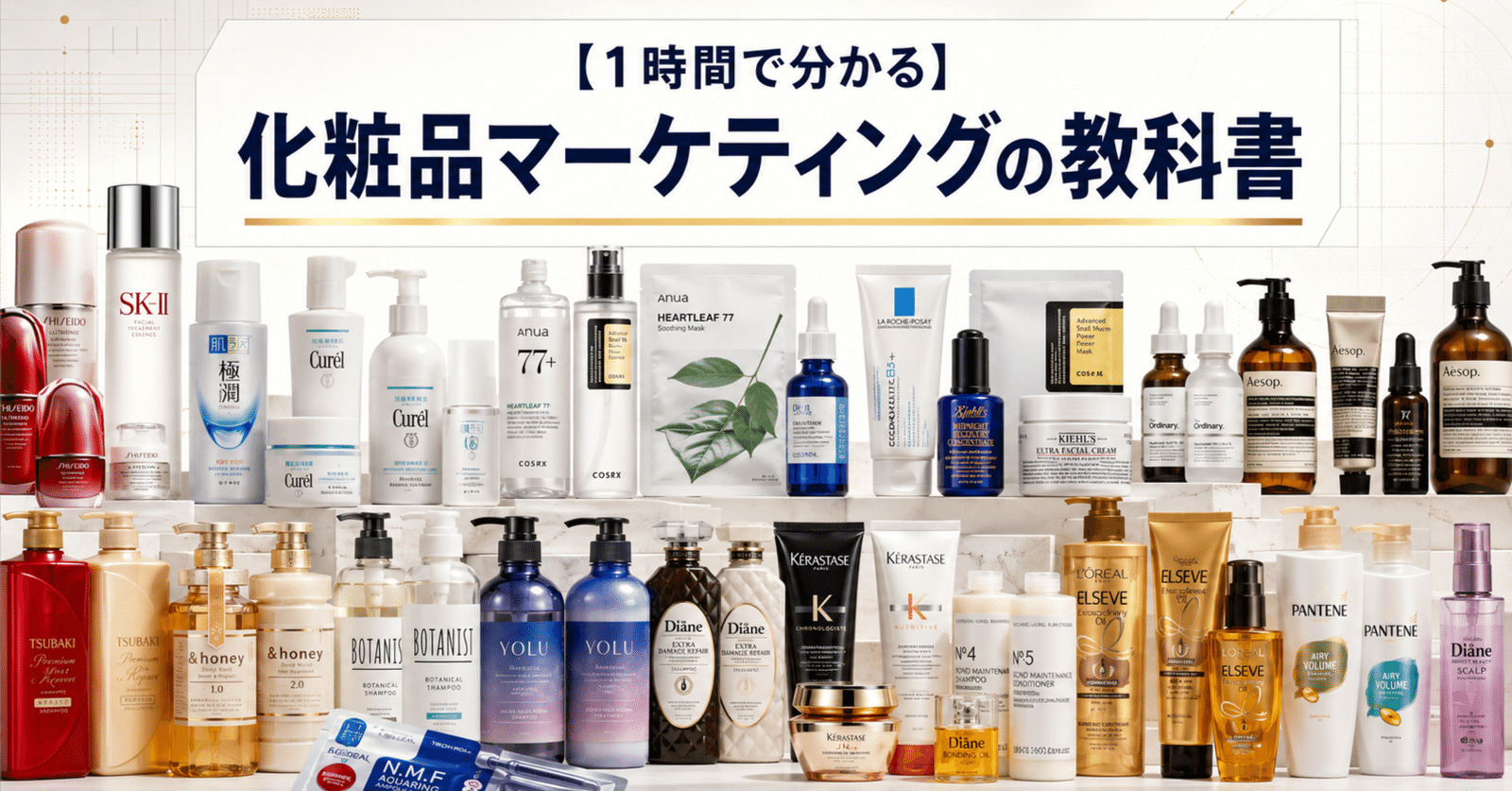
- Brands that keep selling have exactly one thing in common
- How it used to be sold
- Why it no longer works
- How it is sold now: why eight brands sold
- How we know: seeing talk and sales on the same timeline
- From here: attacking a red ocean with multiple channels
- Why the OEM matters
- Summary: managing by volume of talk is new, and old
The other day I had the chance to ask someone who used to run a brand at one of Japan's largest cosmetics companies how they do competitive analysis. The answer: "We went back several years on each competing brand and worked through all of it, by hand, over a very long time." Who they cast and when, how much they invested, where sales jumped.
What I felt hearing that was not "impressive." It was this: the big companies go this far. But the small and emerging brands I work with every day cannot spare that kind of time, a dedicated person, or that budget. Wins and losses are being decided not by the strength of the product but by the strength of the research. That is what had been bothering me.
So in this playbook I have written up what those big companies actually analyze, as a textbook on how cosmetics keep selling. Read seriously, it takes under an hour. But the content is the same competitive analysis the big companies spend months doing by hand, and for this article I re-measured eight cosmetics brands back to their launch dates: 30,961 posts and about 2.1 billion views in total. I promise it is worth several books' worth of knowledge. It is written so the argument holds if you only read the bold lines, so if you are busy, do one pass on the bold first. The final chapter turns it into what to do tomorrow, by the position you are in.
My day job is marketing support for cosmetics makers and cosmetics OEMs, and taking brands overseas. I also built POSBUZZ, a tool that runs automatically the analysis the big companies spend half a year doing by hand. Every number in this article was measured with that tool.
Let me ask you one thing first.
Think of the last cosmetic product you bought. Was the trigger a TV commercial?
Probably not. A friend's recommendation, someone's post that came across your feed, the reviews you found when you searched: in other words, "something said by someone who is not the company." This playbook starts by backing that intuition with numbers.
Chapter 1. Brands that keep selling have exactly one thing in common
Start by separating "selling" from "keeps selling."
Selling for a moment has never been easier. Dump a pile of ad budget, hire influencers in bulk, discount into a marketplace sale. Spend money and cosmetics sell.
The problem is that almost all of it is one-and-done. Brands whose sales drop the moment the ads stop, and brands that keep selling after the ads stop. Where does the difference come from?
When we lined up "social numbers" against "sales" for dozens of brands, the answer was almost disappointingly simple.
Brands with a large volume of "third-party talk that nobody paid for," in other words UGC (user-generated content), become brands that keep selling.
Not ads the company runs, not paid PR posts, but the amount ordinary users talk on their own. That alone, regardless of the size of the company's capital, was strongly tied to "keeps selling."
(From here on, "UGC" and "third-party talk" mean the same thing.)
And here is the single most important point of this article, up front. UGC is not a lottery you win if you happen to go viral. UGC follows rules. The eight brands in Chapter 4 differ wildly in category and size, but every one of them deliberately built "a reason for UGC to happen" into the product, the price, the channel, or the promotion.
Do not misread this as "advertising is unnecessary." As Chapter 4 shows, most of the winning brands are in fact very good at advertising. The difference is the role. Advertising creates the first spark of awareness; what sustains a brand that keeps selling is UGC. A brand that runs ads without UGC ever forming is exactly the brand whose "sales stop when the ads stop."
Why does UGC work for "keeps selling"?
- Trust: the words of a third party with nothing to gain are believed many times over an ad.
- Inventory: an ad disappears the moment you stop it, but posts and reviews stay and bring in new customers next month and next year.
- Reproduction: talk breeds talk. A brand that is being talked about becomes "the brand everyone is looking at," and the psychological bar for the next post drops.
The rest of this playbook is entirely the proof of that one sentence, and the specifics of "so how do you make the talk happen."
Chapter 2. How it used to be sold
"UGC matters" sounds like a very current thing to say. Some of you thought "another social-media article" (I get it; I am tired of "the new rules of the social era" pieces too).
But there is a reason this article starts with history. The change happening in cosmetics right now is "the old way of selling stopped working." So unless you know how well the old way worked, you cannot see precisely what is happening now. And, to say it up front, the prototype of today's answer is buried inside the way things were sold a hundred years ago.
2-1. The blueprint of Japan's cosmetics business was completed a century ago
The blueprint of the Japanese cosmetics business was drawn by Shiseido. Look at its three inventions in order and you see what this industry has competed on.
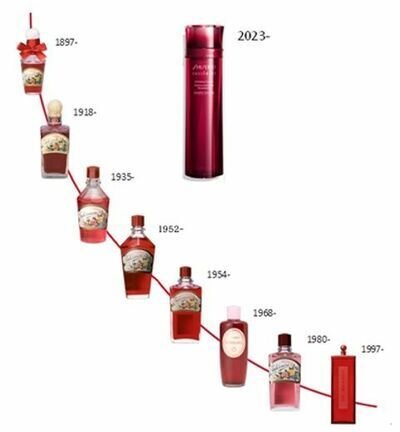
The first invention was "justifying a high price." In 1897 Shiseido launched Eudermine, a "high-grade lotion" applying Western pharmacology. Cosmetics at the time were close to sundries, but by bringing in the authority of pharmaceutical science, it gave a high price a reason. The basic grammar of the cosmetics business, "research justifies price," was born at this point.
The second invention was "a distribution network that protects price." The industry then was dominated by dumping: once a maker sold to a wholesaler, each shop priced as it pleased. If the shop next door cut 20%, you cut 30%. A price war.
Anyone running a brand business will recognize this as the death of a brand itself.
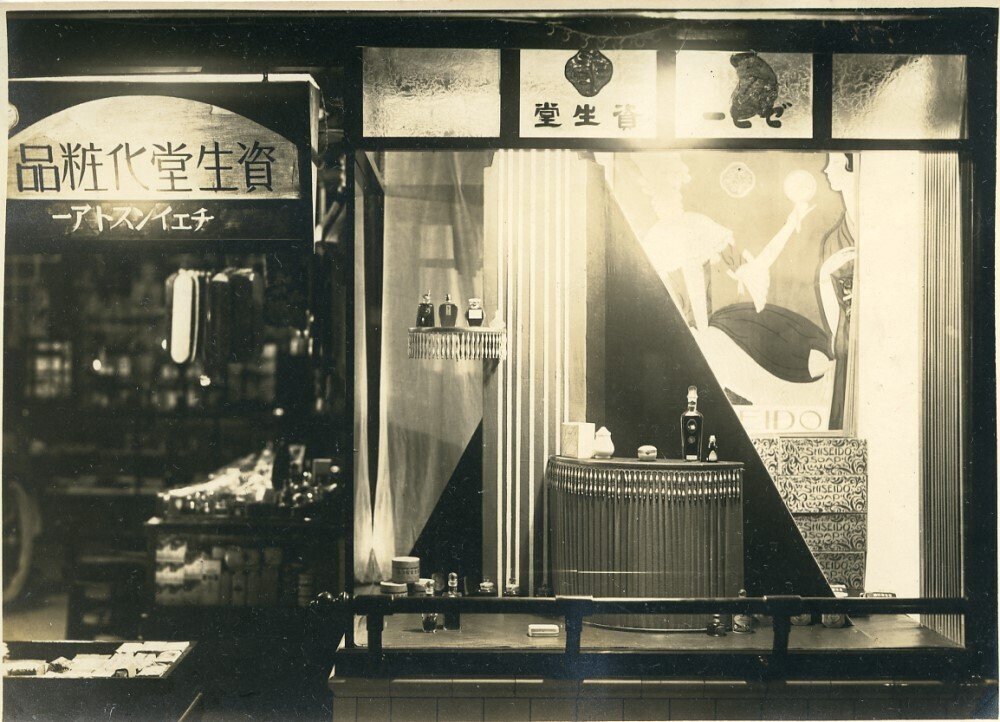
So in 1923, in the middle of rebuilding after the Great Kanto Earthquake, Shiseido started the chain-store system. It signed individual contracts with independent neighborhood retailers and organized only "shops that sell at list price" as partner stores. The shops were freed from the price war and earned a stable margin; Shiseido could unify price and brand image nationwide. That exchange, "list-price sales, mutual prosperity," signed up about 3,000 shops in a short time. In 1935 it even built a training school for member shops and managed the quality of the sales floor itself.
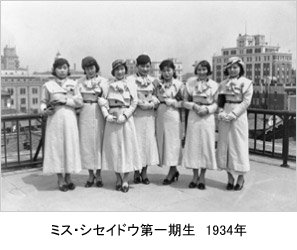
The third invention was "people who talk at the counter, and customers who talk to each other." In 1934, nine women were selected from more than 240 applicants, trained for seven months, and put behind counters: "Miss Shiseido," the origin of today's beauty consultants. In 1937 came the Hanatsubaki-kai customer membership. Not selling and done, but organizing customers as members and turning them into a continuing relationship.
Now translate those three inventions into today's words.
- High-grade cosmetics: "price justified by research (reason to believe)"
- Chain stores: "price control and a sales network"
- Miss Shiseido and Hanatsubaki-kai: "ambassadors and community management"
It is startling how exactly today's marketing vocabulary fits.
In other words, a hundred years ago Shiseido had already completed a "keeps selling" machine: a price-protecting network × people who explain at the counter × customers organized as members.
2-2. The finished form: TSUBAKI (2006)
The highest point of this "advertising × distribution" model was Shiseido's TSUBAKI, launched in March 2006. If you remember the time, you remember the red bottle and the sheer volume of TV commercials.
- Advertising spend is said to have exceeded ¥5 billion a year
- The "Japanese women are beautiful" campaign lined up six actresses: Yukie Nakama, Yuko Takeuchi, Ryoko Hirosue, Rena Tanaka, Takako Uehara and Arisa Mizuki
- Result: about ¥4 billion in sales in the first month, closing the year at 1.8 times a ¥10 billion plan. Shiseido jumped from fourth to first in shampoo share by maker
It was an era when concentrating promotion spend in mass advertising could move the ranking of a whole market (assuming good marketing communication, of course). Television had a common yardstick, GRP, and you could calculate what percentage you would reach for a given spend. Ad budget and shelf count converted straight into sales.
This TSUBAKI method became the standard strategy of the cosmetics industry afterward. To build a big brand: cast an actress, bundle commercials, take the shelf. Every company polished this template. The job in the "marketing department" so popular with new graduates was, for a long time, the operation of this template.
And from the 2010s on, this finished way of selling stopped working, more and more. More commercials, a different actress, and it no longer sold the way it used to. Not because the tactics got worse, but because the premises that made this way of selling possible had changed. What changed? The next chapter.
Chapter 3. Why it no longer works
The premises behind TSUBAKI-style selling collapsed under four structural changes: ① anyone can make a product now (deregulation), ② advertising effect can no longer be calculated in advance (fragmented awareness paths), ③ the role of vouching for a product's quality moved outside the company (trust changed hands), ④ ways of selling that bypass the drugstore shelf multiplied (shelf bypass). Make, deliver, be believed, sell: all four.
3-1. Deregulation removed the "barrier to entry"
It is not widely known, but the first thing to change the business model of the cosmetics industry was deregulation.
- In April 2001, the per-category approval and licensing system for cosmetics was abolished. It switched to a list-based ingredient regulation with mandatory full-ingredient labeling, and anything within the list could be launched without prior approval.
- In April 2005, the revised Pharmaceutical Affairs Law legally separated "the company that makes" from "the company that sells." The marketing authorization holder, responsible for the product on the market, was split from the manufacturer, and "fabless entry," a company with no factory that outsources all manufacturing to an OEM and launches a brand, became an established institution.
To be precise, there are license requirements (a responsible officer, quality and safety management), so it is not "anyone, unconditionally."
In practice, the number of cosmetics marketing-authorization licenses (the license to bear responsibility for putting a product on the market) has "risen continuously since 2006," when the separation began, reaching 4,324 as of March 2024. That is nearly level with the number of licensed manufacturers with factories (4,357): an industry structure where "selling without making" is normal.
The result is today's market. Japan's haircare market is "more than 60 makers and 150-plus brands lined up, and consumers cannot choose."
In other words: even if you own a brand today, in six months your trading partner, the company next door, or the influencer herself can launch one. The product is no longer a barrier to entry.
3-2. Awareness paths multiplied
In TSUBAKI's day there was one road to awareness. Reach through mass media (TV and so on), harvest at the shelf. There was a common yardstick, GRP (gross rating points), and you could calculate in advance what percentage a given spend would reach.
Now the entry points to awareness have diversified into social, search, review sites, video, live commerce, AI and more. It is not just that there are more media. The decisive point is that digital still has no common yardstick equivalent to GRP. A million views on TikTok and a million on YouTube reach differently and last differently, and there is no conversion table. "How much do I have to spend to reach them" is in nobody's hands in the industry. Which means the size of the budget itself is no longer an advantage.
3-3. Consumers changed who they believe
What used to vouch for "this is a good product" was the beauty consultant's counseling and the authority of beauty magazines. Both were things a company could control.
What consumers consult before buying now is @cosme and LIPS, reviews on X, "honest reviews" on TikTok, and the talk of a third party with the same skin concern. Here lies a problem that troubles large and small companies alike. You can hire "someone to explain" at the counter, but you cannot hire "a third party who talks." The moment you hire them it becomes an ad, and viewers and the platform's sponsorship label see through it. In other words, companies can no longer decide for themselves "what will be believed."
3-4. More selling that bypasses the shelf
The value of the distribution network is also no longer as absolute as it was. E-commerce platforms such as Amazon, Rakuten, Qoo10 and TikTok Shop reach the consumer without passing through the drugstore shelf. As Chapter 4 shows, even reverse-order entry became possible: Perfect One Focus built its track record in e-commerce and only then went to the shelf.
To be clear, the shelf did not become worthless. We moved from an era where the company with the shelf wins to an era where you widen your points of sale so that whichever path you are found on, and whichever path you are bought on, is fine. The shelf went from "have it and you win" to "one of the points of sale."
The advertising yardstick is gone, consumers believe someone else, and the shelf monopoly no longer works. So what are the brands that are actually selling right now doing? From here, the main text.
Chapter 4. How it is sold now: why eight brands sold
Up to the last chapter we saw that "the old winning formula collapsed." This chapter looks at how eight named brands actually sold.
A word on how the cases were chosen. They were picked to show how the way to win changes with the size of the company's capital: large, mid-size, and new entrant. Cases that look like the same "sold through social" have completely different designs underneath. In fact, copying a brand of a different size from yours is the most common failure. So read this chapter not as a gallery of cases but as the chapter where you identify which type your company should fight as.
4-1. Why the large companies sold
THE ANSWER (Kao, launched November 2024): it handed an answer to "choice fatigue"
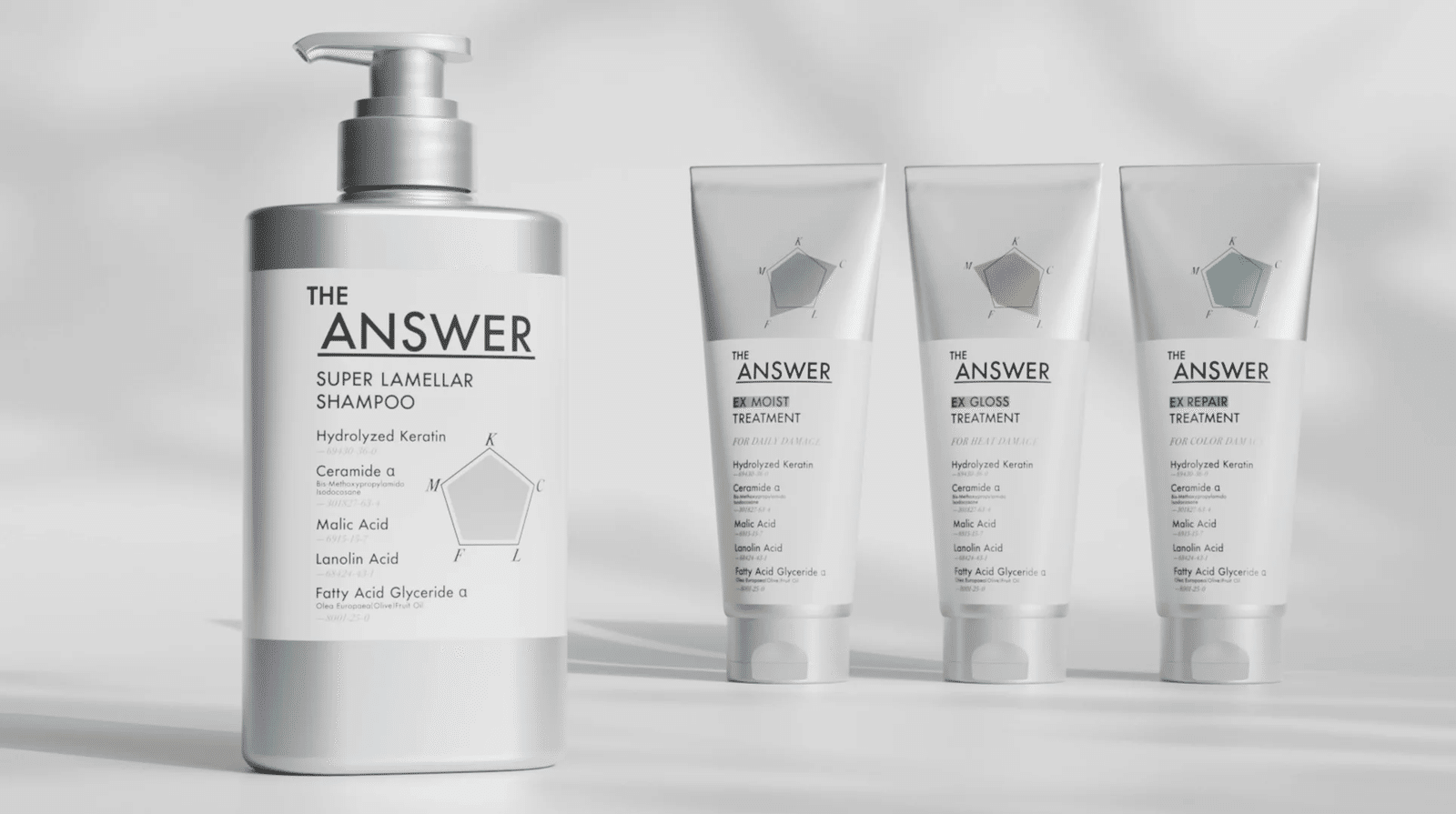
The situation: the haircare shelf of the 2020s was flooded with Korean brands, salon lines and D2C premium shampoos, "more than 60 makers and 150-plus brands," a traffic jam. Fragrance-and-worldview messaging had saturated, and consumers were in choice fatigue: "which one actually works?"
Why it sold: into that, Kao entered with a straight line: "The answer from 100 years of research." The appeal was neither fragrance nor worldview but a single point: trust in Kao. The brand name itself is a declaration that "you don't have to hesitate anymore," designed on the side of the fatigued consumer. Rather than trying to be one notch better on the competitors' turf (sensibility and worldview), it changed the turf and drew its own axis of opposition, "science versus sentiment." The cleanest possible way for a latecomer to enter head-on.
The order of selling was meticulous too. With the power to put it on every drugstore shelf in the country at once, it deliberately did not. It launched first in variety stores such as LOFT and Hands, let high-sensitivity beauty shoppers try it first, and only after UGC had accumulated on social did it widen to mass shelves like Welcia.
So how was that "buzz" made? Looking at the top posts in POSBUZZ, 13 of the top 15 videos by views were sponsored tie-ups. "I thought it was a treatment, turns out it's a shampoo," "hair routine the night before a date," "7 great items to buy at Welcia": all UGC-style videos.
And they guide the viewer all the way to picking it up in store: "the new launch everyone's talking about at Welcia," "Best Cosme award winner."
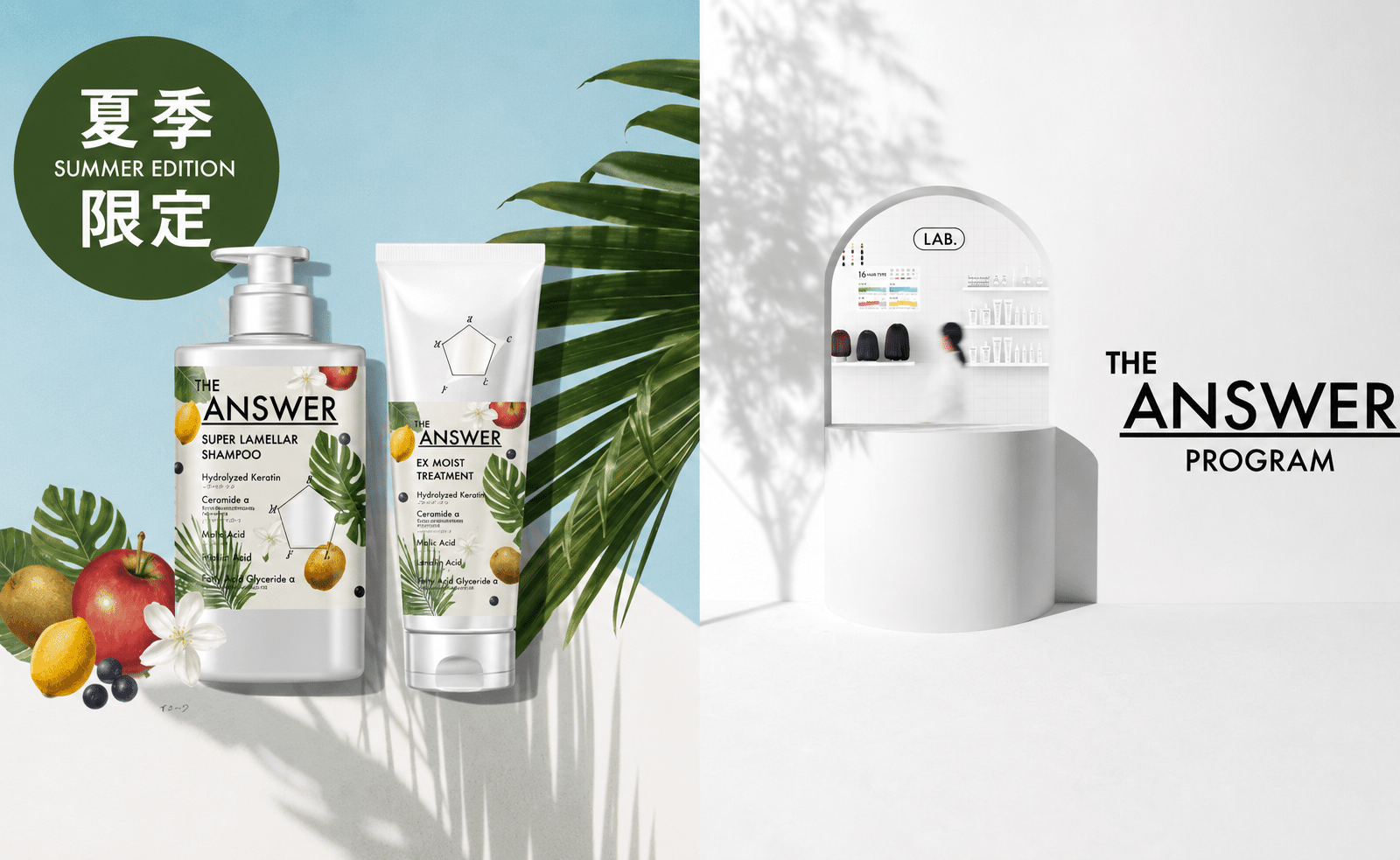
After launch it kept up exposure every few months with additions such as seasonal care, and in 2026 built a subscription program to catch repeat purchase. Result: one million units in seven months, about 2.3 million in a year. Build awareness with UGC-style exposure, receive it on shelves nationwide, connect to repeat with subscription. Having designed this flow from the start is why it won.
ELIXIR (Shiseido, launched 1983): it held "between department store and drugstore cheap" for 40 years
The situation: anti-aging care always had a gap. The department-store counter is expensive and intimidating; the cheap drugstore shelf does not feel like it works. The middle demand: "serious care, at an approachable price and place." The more self-service buying spread, the bigger this gap grew.
Why it sold: the core is that it turned forty years of collagen research into a word anyone can check in a mirror: tsuyadama, the "glow bead." The effect of anti-aging care is inherently hard even for the user to judge. ELIXIR handed out a standard for self-judgment: "if there is a bead of light on your cheek, the care is working." That works twice over.
First, in a self-service drugstore aisle with no beauty consultant, the product can explain its own value.
Second, "got my glow bead" becomes the vocabulary of an achievement report, and users' talk arises naturally. Putting the effect into words and handing them out is the same as handing out talk.
The other pillar is how it uses reformulation. ELIXIR renews its flagship lotion and emulsion every few years, and this is not mere product improvement. On the same day it can hand existing users "a reason to rebuy," media "a reason to cover," and retailers "a reason to reset the shelf."
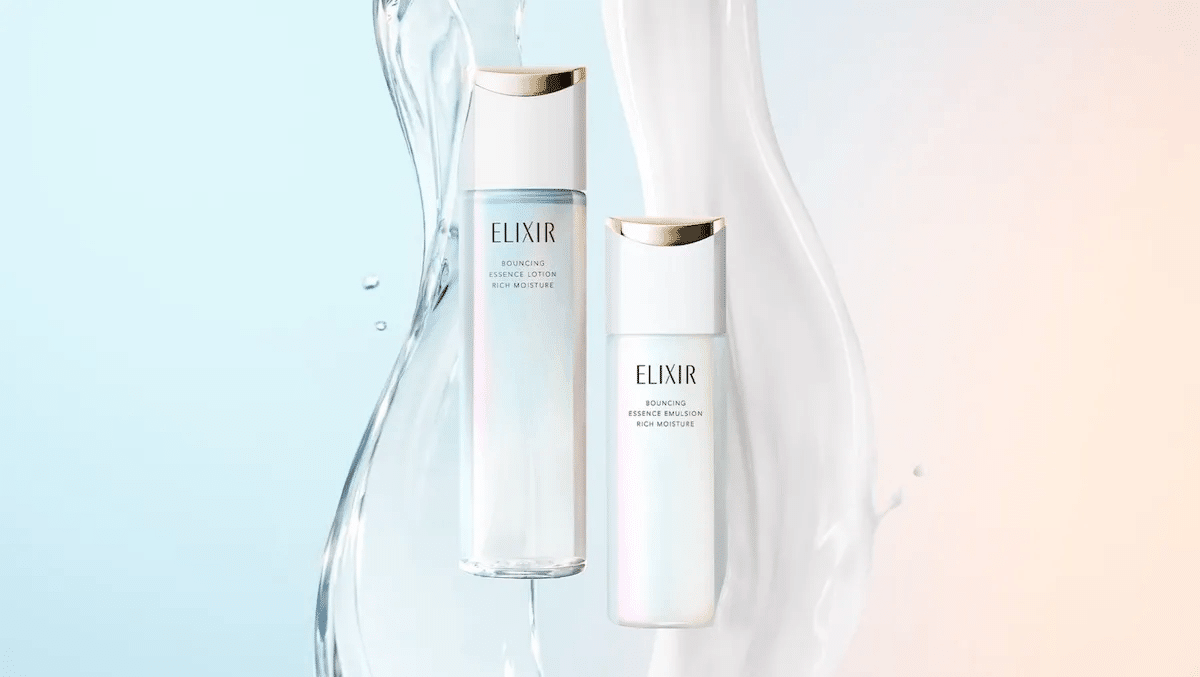
The 2022 renewal was done with "the largest investment ever," and the series passed 10 million units cumulatively.
And one of the pillars that fills the gaps between renewals is the "Wrinkle Cream."
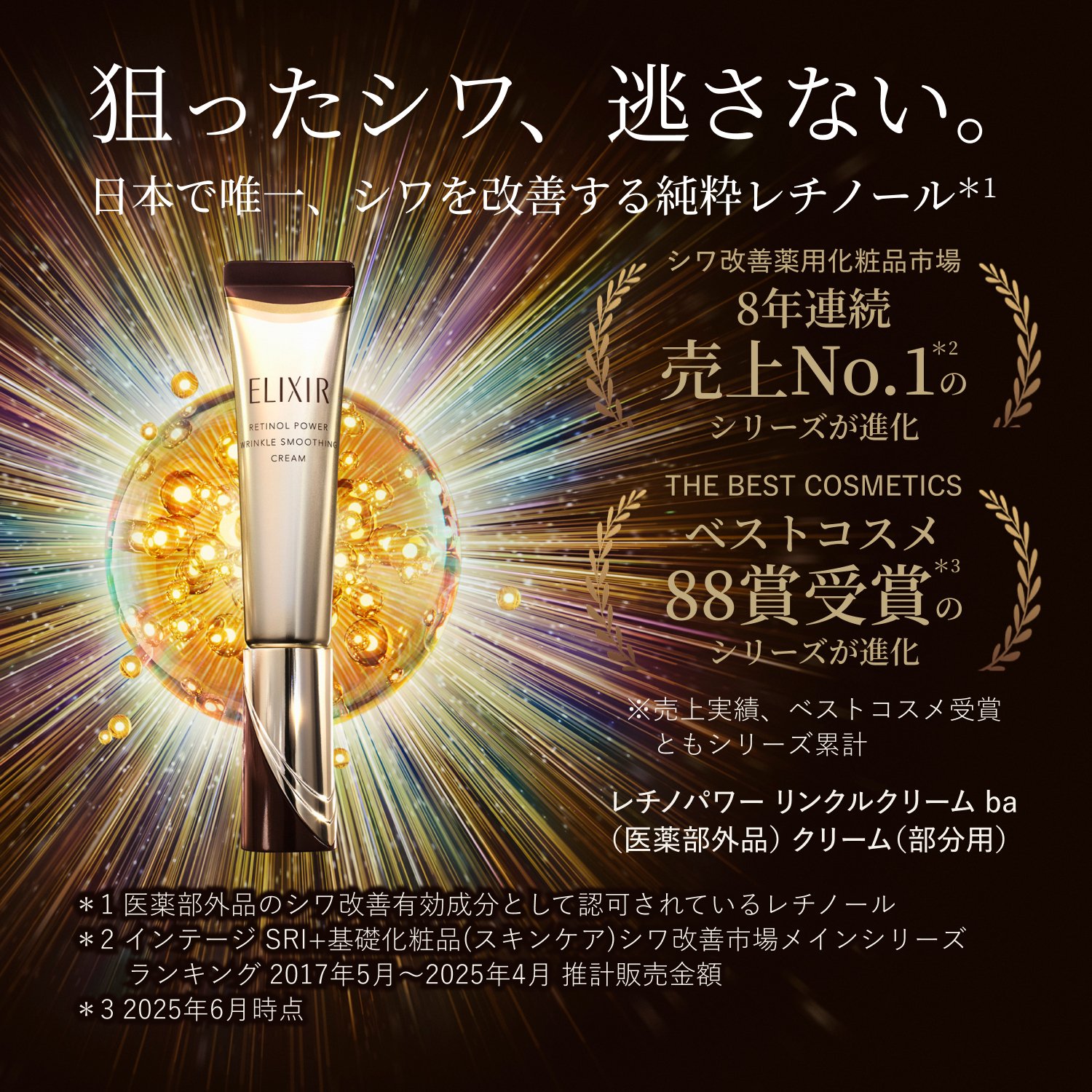
In 2017, the first quasi-drug in Japan allowed to state outright that it "improves wrinkles" appeared. Until then cosmetics could only say "makes fine lines due to dryness less noticeable." Shiseido launched it under ELIXIR, and the "pure retinol" it uses was the only retinol approved in Japan as an active ingredient for wrinkle improvement.
Its role is "the entrance." Bring in people with a pressing, specific concern (wrinkles) through a single-point breakthrough product, and grow them into series users. Not acquiring new customers every year, but building a structure where customers who came in do not leave. That is why it has renewed its number-one position in skincare sales for nineteen consecutive years.
KATE Lip Monster (Kanebo Cosmetics, launched May 2021): it captured the honest wish at the moment a market collapsed
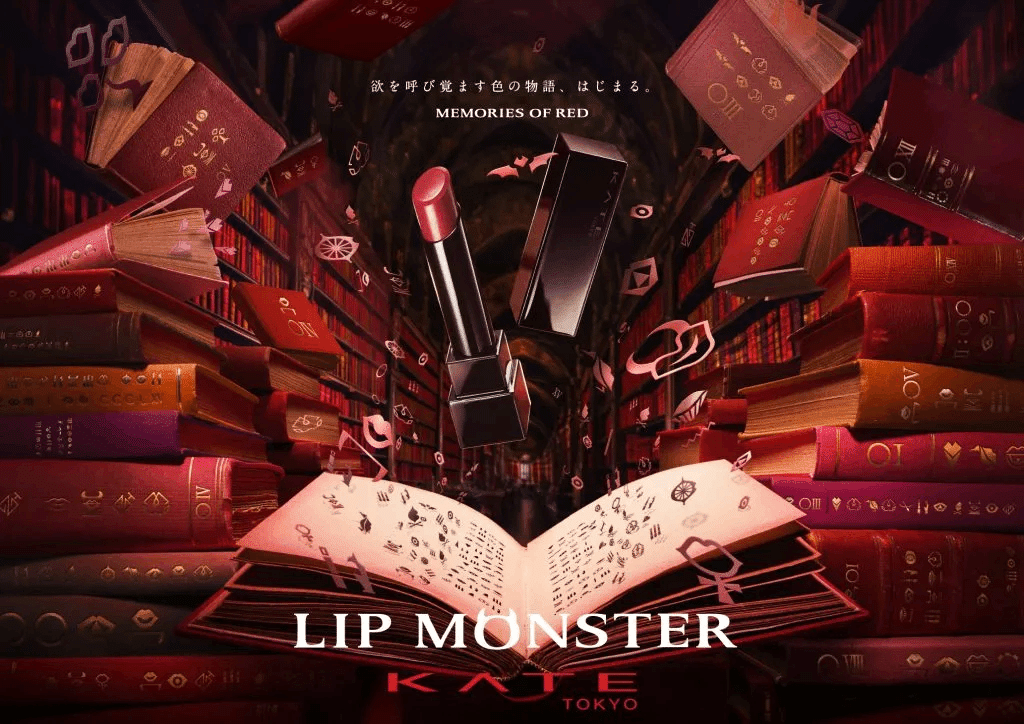
The situation: with masks the norm under COVID, the lipstick market itself had collapsed. Industry common sense said "lipstick doesn't sell in the age of masks." While every company pulled investment, consumers had a wish with nowhere to go: "I don't want to give up lipstick. If it doesn't transfer to the mask, I want to wear it."
Why it sold: first, "doesn't come off." What matters is that this function was a claim that makes you want to test whether it is really true. The claim of a lipstick that doesn't come off can be verified by anyone who puts a mask on and takes it off on camera: the function itself had the format of talk, the verification video, built in.
And the price was in the drugstore range. The bar for "doubt, test, report" was low, and in our measurement the sponsored share of 350 million views was 0–15% across all platforms: almost all of it was talk nobody asked for.
Then the shades. "Heat Haze," "Dark Fig," "Final Boss": giving each color a name and a world created reasons to buy a second and third ("which color do you like," "all-shade comparison," "finding my shade") and reasons to keep talking. It turned a lipstick that ends at one per person into something you collect. The 28 million units sold cumulatively are the result of that multiplication: new customers come in through the urge to verify, repeat and talk continue through the shades. And, to add, the use of supply was clever. Even after shipping 1.2 million units in six months, shortages continued and the brand issued an official "apology for the shortage." The fact that "you can't get it" became news itself, and chasing restock information became more talk. A textbook case of building a three-layer cycle of talk into the product design alone, with almost no ad spend.
How the large companies sell: the strategic pattern in words
Line up the three cases and a clear pattern in today's large-company marketing strategy appears.
In a sentence: they concentrate their ingenuity on turning the assets they already own into a form consumers can restate in their own words. The largest asset a big company has is R&D. But research, as it is, does not get talked about. Nobody explains "super lamellar technology" to a friend, but "the answer," "glow bead" and "doesn't come off" can be said. For THE ANSWER, ELIXIR and Lip Monster alike, the battle was not the technology itself but the words it was delivered in. Treating that as the brand's central task rather than handing it to an ad agency is what the winning big companies have in common.
The other pattern is that they do not leave the timing of attention to chance. ELIXIR's renewal cycle, THE ANSWER's seasonal drops: rather than praying for buzz, they hand out the reason to rebuy, the reason to report and the reason to reset the shelf on the same day, and make the day of attention themselves. Lip Monster is the one type that does not rely on ads, but in managing the timing at which attention reignites through shade numbers and limited colors, it is the same.
Finally, and this may surprise you, large companies are strongest when a market is shrinking. The lipstick market in the mask era is the classic case: in a market where competitors have pulled investment, only the unsolved honest wishes remain. Only a company with stamina can pour research capability in there. Whether you can reread "the market is bad, so withdraw" as "the market is bad, so it is a chance to dominate" is the dividing line of large-company marketing.
4-2. Why the mid-size companies sold
YOLU (I-ne, launched September 2021): it sold "night," a time nobody had named
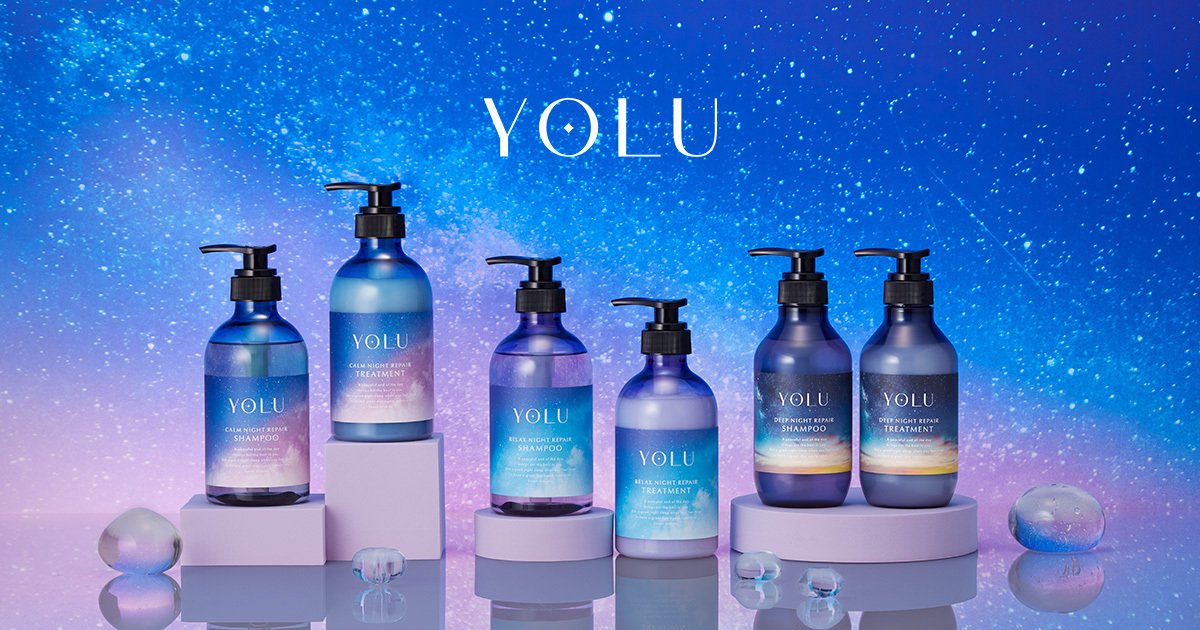
The situation: time at home grew under COVID, and interest in "home beauty" and sleep quality was beginning to rise. Meanwhile the shampoo shelf was saturated after the botanical boom, and ingredient-and-fragrance messaging was already taken.
Why it sold: it coined the phrase "night beauty." Friction and dryness while you sleep, frizz the next morning. It named a time everyone experiences but nobody thought of as something to care for.
Why does this work? A person uses only one shampoo. The shelf is saturated, so for a new brand to sell, people have to quit the one they are using. But "good ingredients" and "nice fragrance" do not make people switch, because they have no particular complaint about their current shampoo. This is what "night beauty" hit: it inserts an unnoticed lack, "aren't you doing nothing for your hair while you sleep?" Make people care about something they had not cared about, and that becomes the reason to switch.
But when we look at the top posts in POSBUZZ, "a coined word went viral on its own" is not what happened. The top twenty TikTok videos ran 4.2 to 13.5 million views each, and every one was a sponsored tie-up (e.g. 13 million, 12.3 million views). What was talked about was not "what night beauty is" but "doesn't weigh hair down but keeps it together" and "you can get it at Don Quijote." Feel, and where to buy.
So who talks about "night beauty"? The brand itself. Sleep Day collaborations, candle-night events. Because it can connect the conversation to how you spend the night and to sleep, the brand can keep talking even in months with no new product. Had it called itself a "moisturizing shampoo," it could not.
So YOLU is a two-stage structure: "night beauty" creates the reason to switch and the pretext to keep talking, and the harvest is done with a mass of tie-ups delivering feel and point of sale.
Behind this is the reproducible machinery of its operator, I-ne. It takes the "design × drugstore × social" formula it established with BOTANIST and re-executes it in a new context: a company that builds brands as a system, not a one-shot bet. On the shelf it takes visibility with night-themed packaging, and it rotates seasonal and collaboration limited editions fast to keep an "always something new" state and avoid being dropped as a staple. Ten million units in the first year, 100 million cumulative in four and a half, number one in drugstore haircare by brand sales.
Perfect One Focus (Shinnihonseiyaku, launched September 2021): it worked backward from "where they buy"
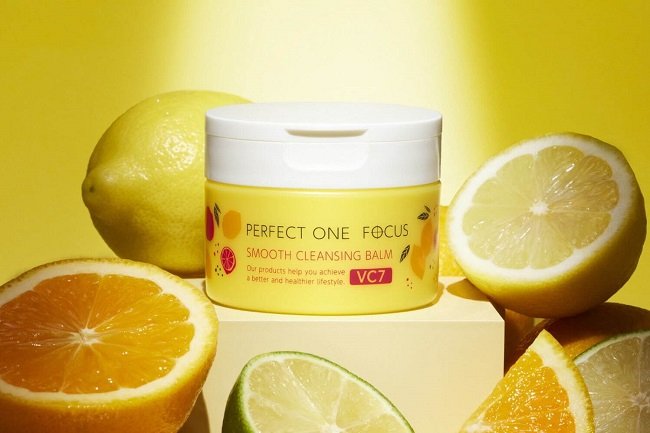
The situation: pores are the top skin concern among young consumers. And this generation's way of buying cosmetics had changed, along with K-beauty culture, to "the wallet opens on the Qoo10 Mega Sale cycle." When and where to buy is decided before what to buy.
Why it sold: the first fork was that it did not "rejuvenate" the existing brand.
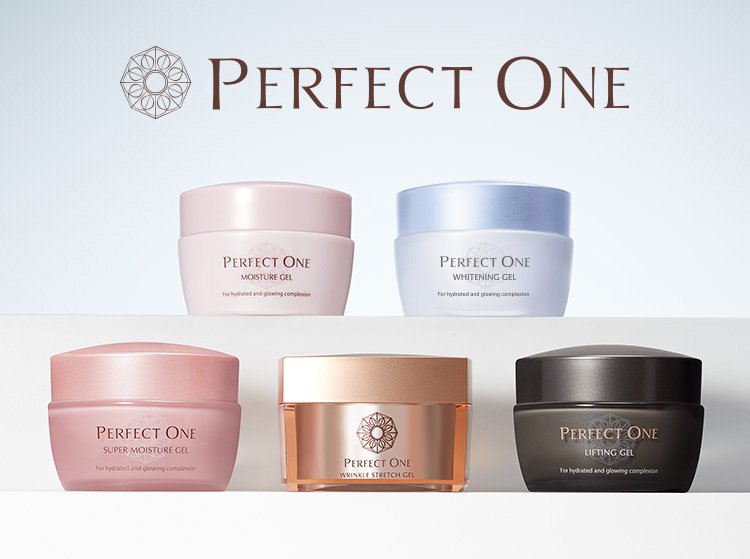
The parent brand, Perfect One, is an all-in-one gel launched in 2006. Time-saving skincare where one jar replaces lotion, emulsion and cream: number one in domestic all-in-one sales, supported by customers in their forties and up, sold mainly through TV shopping and catalogs. "The time-saving skincare staple that over-forties buy by mail order."
Make a brand that has penetrated the middle-aged look young, and existing customers feel something is off while the young are left with a "my parents' brand" feeling.
Instead, Shinnihonseiyaku created a separate brand and transplanted only the invisible assets from the parent: formulation technology and the customer-management know-how built up in direct marketing.
Then the main channel. Not TV, not the store, but Qoo10 as the main marketplace. The reason is plain: the target generation's wallet opens on the "Mega Sale" cycle. Concentrate TikTok ads in the days before each of the four Mega Sales a year, and insert the product into the "what to buy in the Mega Sale" lists, a buying context unique to this generation. A design that synchronizes the moment talk peaks with the moment you can buy. (In POSBUZZ, too, the view peaks land in Mega Sale months, and they grew every cycle: 21.45 million in May 2024 to 37.36 million in November 2025.)
After building year-one sales above ¥1 billion with a 60% e-commerce share, it used that track record as a weapon to get onto the drugstore shelf: reverse-order distribution. For a mid-size company that cannot start from the shelf, it is the leading example showing that "the e-commerce number is the ticket to the shelf."
LuLuLun (launched July 2011): it rewrote "a treat" as "every day"
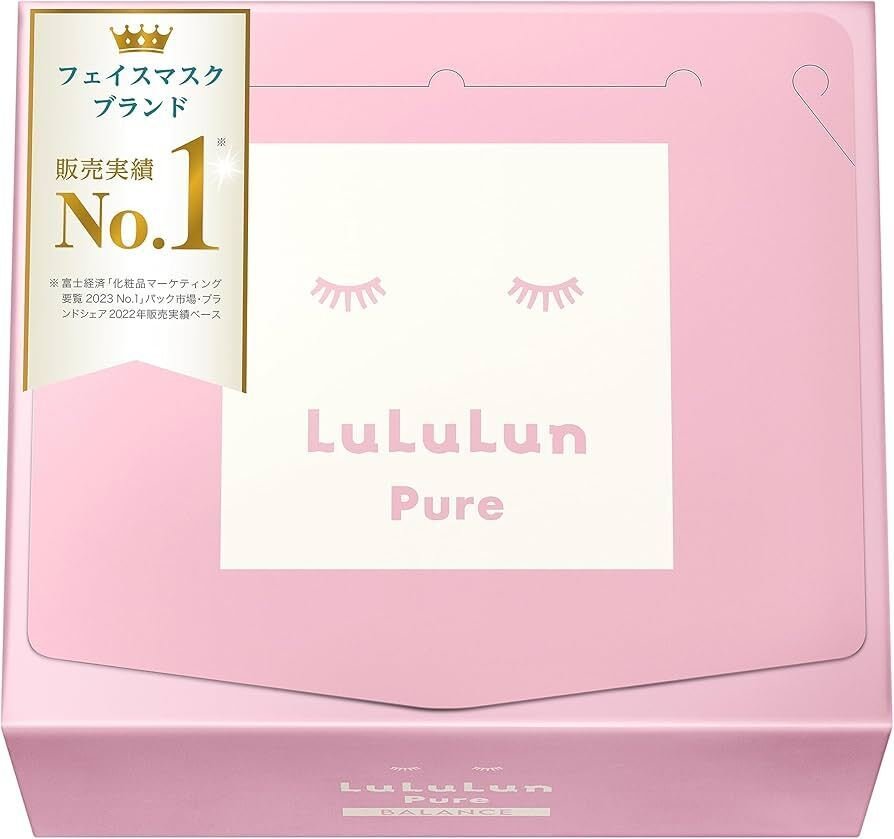
The situation: 2011, the year of the Great East Japan Earthquake. In an atmosphere of "treasure every day," sheet masks were bound by the convention of "a special-occasion treat at several hundred yen a sheet." People wanted to use them daily, but neither the price nor the meaning allowed it.
Why it sold: it rewrote the meaning to "a mask you use every day in place of toner." What to notice here is that it did not do the rewrite with words alone. A bulk box that brought the price to tens of yen per sheet backed up the price; the "365" on the package imprinted daily use; and it lined up the backing of feel, easier than applying toner by hand.
Rather than going after "share of the treat-mask market," it redefined its market as every woman who does skincare daily, a base dozens of times larger.
It also worked against boredom. Nine reformulations kept updating the contents, and on the shelf, packs with no character and no face photo are stacked like blocks and function as advertising in themselves. And the greatest invention was "Traveling LuLuLun." Regional ingredients × region-limited packaging, deliberately not sold on the official online store, available only locally. Beyond monopolizing souvenirs, a distribution channel unusual for cosmetics, a souvenir is "the giver talks, the receiver tries": the product becomes a distribution network that reaches new customers hand to hand.
Two billion sheets cumulative and number one in face-mask share are the result of fifteen years of "rewriting the meaning × fighting boredom × inventing a channel."
How the mid-size companies sell: the strategic pattern in words
Boiled down, the three mid-size cases share one pattern. Do not stand on the same turf as the big companies. Be the one who builds the turf.
YOLU chose "time," not ingredient or fragrance; LuLuLun "frequency of use"; Perfect One Focus "where and on which day you buy." None of the three aimed for first place on an existing axis of competition. Each added one new axis to the market and placed itself at the far end of it. Fight on an existing axis and it becomes a contest of research, distribution and ad budget, which is the big companies' turf.
Build an axis, and on that axis you are number one from launch day. Mid-size marketing strategy is, taken to its extreme, the job of inventing "on which axis am I number one."
And a new axis has an unexpected by-product: it creates a pretext to talk. A post that carries a new concept, "night beauty," "the everyday mask," whether official or sponsored, gets to look like "a proposal for a new habit" rather than "just a product plug." The same production budget, the same casting fee, seen differently. Creating context does not make advertising unnecessary; it changes the efficiency of each ad.
How they spend also has something in common. Because mid-size companies cannot cover the whole surface the way big ones can, they concentrate investment on "the moment you can buy." Perfect One Focus's concentrated push before the Mega Sale is the classic example: overlap the period when talk peaks with the day of the sale. Put money only on the moment when awareness converts to purchase at the highest rate.
On channels, "build the track record in e-commerce, then go to the shelf" as Perfect One Focus did is something anyone can aim for. That is the most hopeful conclusion of how mid-size companies sell.
4-3. Why the new entrants sold
Capsule Serum (MD Inc., born September 2023): it gave a visible form to the anxiety behind "seems like it works"
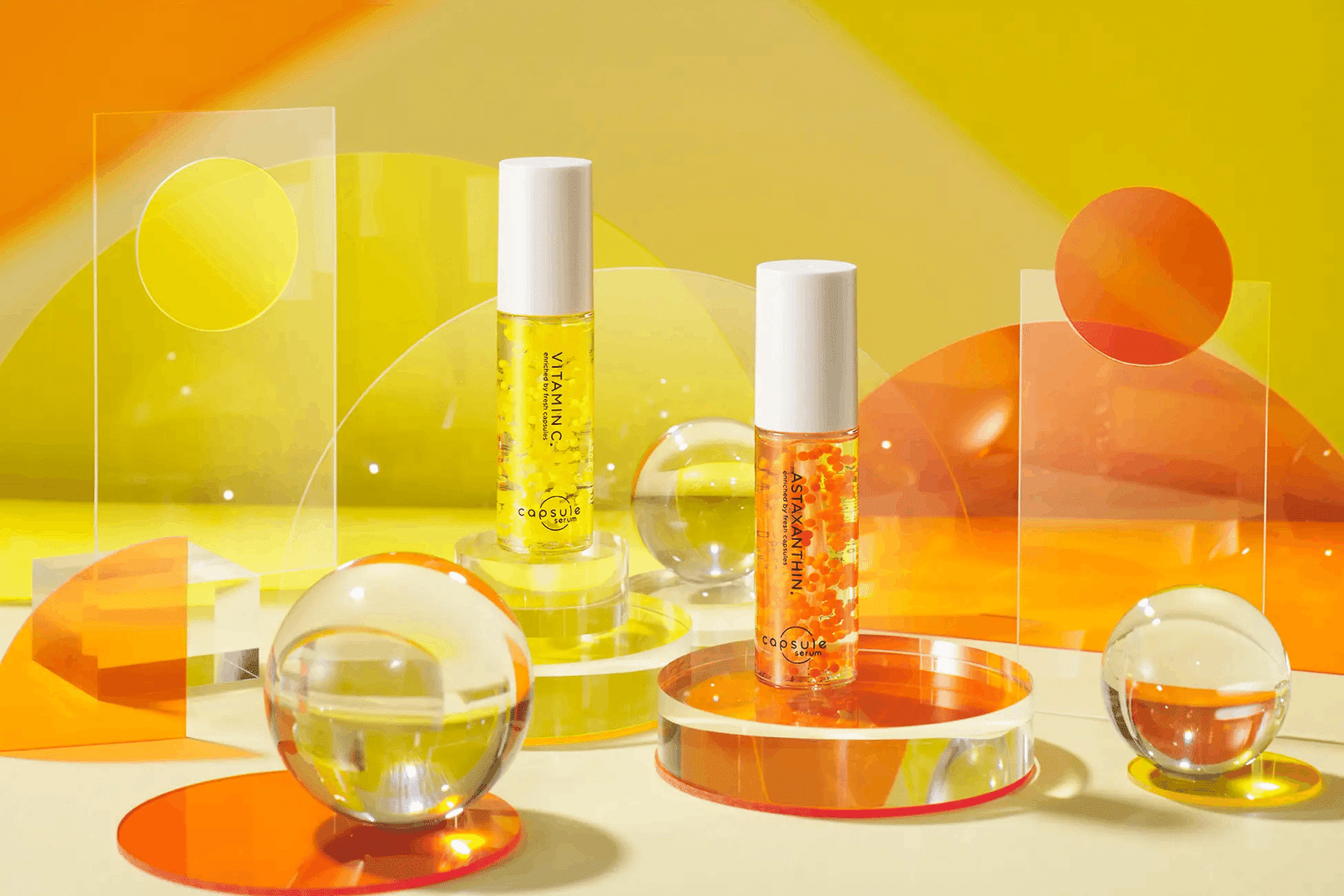
The situation: the Korean-led ingredient-cosmetics boom had established buying "by ingredient name": vitamin C, retinol. But behind the hopes for ingredients was a clinging anxiety: "it probably starts degrading the moment you open it," "I'm afraid it will irritate." The founder is Kensuke Ishii, CEO of MD Inc., the author of "The P&G Way Marketing Textbook" himself.
Why it sold: the product's answer is "a fresh serum, born as it bursts." It rides the tailwind of the ingredient boom without joining the concentration-and-price race. Instead it resolved the anxiety everyone half-sensed, "it degrades the moment you open it," in a visible form: the capsule.
But what actually went viral on social was not this concept. Counting the top 100 posts in our measurement, 40 mention the cleansing, 43 mention pores and blackheads. Those mentioning "bursts" or "fresh serum": 8 (POSBUZZ). The brand's signboard is a serum, but the entrance was the cleansing oil and "pores."
The content is consistent too. "Honest review," "the result after a month of continuous use," "asked my friend with beautiful skin and this was it": verification and testimonial formats filled the top ranks.
And the videos always land at the point of sale. "You can get it at Don Quijote," "found it at Matsukiyo." Here the roughly 6,000 stores nationwide, secured at birth, come into play. Imprint "apparently everyone's talking about it" with video, and have them buy it on the drugstore shelf the next day. 200,000 units in six months; 2.5 million cumulative for the series.
There is a practical lesson here. The brand concept and the entrance that sells can be different things. "Fresh serum" creates the worldview and the reason for the price. But what brings people in was the specific concern: "a cleanser that gets blackheads out of pores." Rather than waiting for people to fall for the concept, let them come in through a concern and learn the brand afterward. That order is fine.
CHPT.9 (Smart Cosme, launched October 2025)
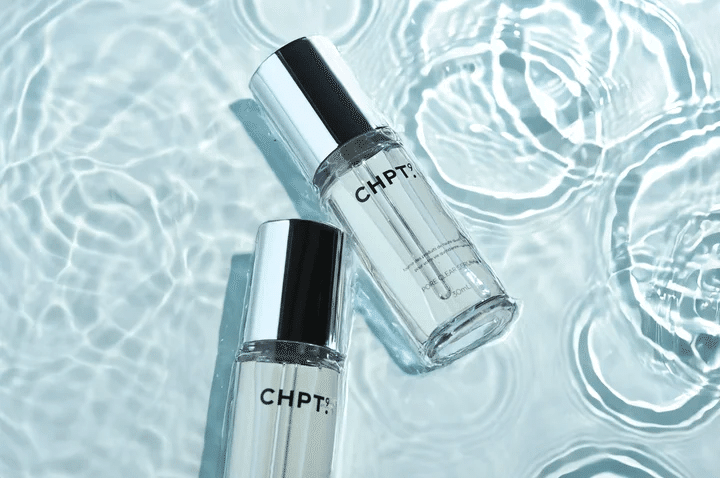
The situation: an entry built on the path where you buy straight from the video (TikTok Shop). Pores and sebum plugs are a brutally contested space, oversupplied in both search and talk, but also one of the few areas where the effect can be shown.
Why it sold: the core of the appeal is making people want it by showing the before-and-after of pore gunk coming out. Pore care is an area where efficacy language is tightly bound by the Yakki law, but "the footage of the moment it comes out" creates certainty without promising an efficacy in words. The stricter the regulation, the more visual persuasion works.
Among the top TikTok posts POSBUZZ examined, the phrase "the generic of department-store brands" appeared, so even the price justification was being built inside the talk.
Mass-produce this type of video through gifting (a sponsored share above 90% on Reels and YouTube Shorts). Not aiming for one viral hit but keeping the same "moment it comes out" shown from different angles by dozens of creators, so that somewhere in the feed you are certain to meet it. And the landing point of the exposure is new: TikTok Shop, where you buy on the spot from the video (in our measurement, #tiktokshop-tagged posts line up at the top), plus stores such as Matsukiyo. The distance from "saw it → want it → can buy it" has shrunk to a few taps. As a result, sales rose in monthly steps from the month after launch: in eleven months, estimated Amazon monthly sales went from ¥480,000 to ¥41.7 million, about 85 times. Eight months later it launched a second product, a serum. Including the move to turn one hit into a brand memory, "CHPT.9, the pore brand," this is the frontline template for a new entrant in the late 2020s.
How the new entrants sell: the strategic pattern in words
The pattern visible in the two new-entrant cases is pouring every resource into "being believed."
Obvious when you think about it: a new entrant has no track record and no authority. Say "it's a good product" and nobody has a reason to believe you. So the new entrants that win give up on persuading with words from the start and swing entirely toward convincing with the eyes. The moment pore gunk comes out. The difference between before and after. Footage that makes you think "this looks like it works" the instant you see it is stronger than a hundred efficacy claims, and because cosmetics are a category where efficacy language is bound by the Yakki law, there is even a tailwind: the less language can be used, the relatively stronger visual persuasion becomes.
They also share how they choose the entrance: enter through a specific concern, not a worldview. For both brands, the actual entrance was "pores." Nobody goes out of their way to sit through an unknown brand's worldview, but everyone stops for their own concern. As Capsule Serum showed, the brand concept need not be the entrance: bring them in through the concern, and let the concept work at the repeat stage.
The next pattern is building exposure and the place to buy as one. Both brands push UGC-style verification and testimonial videos in volume to manufacture the state of "being talked about." The difference: Capsule Serum receives it at 6,000 stores, CHPT.9 at TikTok Shop where you buy straight from the video.
Finally, the time axis. One product selling and becoming a brand are different things. The first product's hit means "a product sold," not "a brand sold." Only when the second product sells does a box of trust, "if it's this brand," form in the consumer's head. CHPT.9 launching its second product in eight months was a move aimed at that promotion, and conversely, the funding plan that puts the first product's profit into developing the second is part of a new entrant's marketing strategy. Thinking about it after the hit is too late: draw the second product into the entry blueprint from the start. That is the plainest and biggest difference between new entrants that survived and those that vanished.
4-4. The three types side by side
| Large | Mid-size | New entrant | |
|---|---|---|---|
| Weapon | Research assets and distribution | Inventing an axis, and speed | Visual persuasion and agility |
| How the message is built | Turn technology into consumers' words | Create the urge to explain with a new word | Hit "want it" directly with before-and-after |
| Channel | Staged distribution (advance → mass) | Invent an own channel; sync to sales | Launch exposure and point of sale together |
| Keeps-selling mechanism | Periodic renewal | Monopolize the context and the channel | Serial launches into a brand |
The three types look different, but they are the same in that all of them design "a reason for third parties to want to talk" first. Translating research, inventing a word, a capsule that bursts: all of it was a device for being talked about. Conversely, a way of selling that fits none of the boxes in this table, pushing with ads alone without a reason to be talked about, does not last at any size.
By the way, I have been repeating "UGC makes sales" all this way, but I have not yet properly shown the numbers that back it. So why can we assert the relationship between talk and sales?
Chapter 5. How we know: seeing talk and sales on the same timeline
5-1. What is the point of overlaying talk on sales in the first place?
The numbers for the eight brands in this article were all re-measured for this piece. From launch day to today, five platforms (YouTube long and short, Instagram Reels, TikTok, X) × daily, overlaid on sales (Amazon POS) on the same timeline.
"OK, and what do you gain from doing that?"
Three things.
Reason 1: because this is an era when the right move is only knowable after the fact. As Chapter 3 showed, today's marketing has no concept like GRP. There is no way to improve except "try, measure, fix." And what does a company that does not measure do? It repeats the same tactics every year, unable to identify why something worked or why it did not.
Reason 2: to tell which UGC leads to sales. The same view count can be a completely different thing. THE ANSWER's launch-period impressions were bought exposure at an 80% sponsored share; Lip Monster's 350 million views were raw UGC at 0–15%.
For the former, the stage is "keep advertising while building a device that grows raw UGC."
For the latter, "make the next wave of attention with supply and new shades rather than ads."
Stare at total views alone and you can never make that call.
In particular, with our tool you can see every piece of UGC and every influencer video for brands other companies have launched, so you can copy their strategy as is.
Reason 3: to price creator casting correctly. In our tool there was a case where a creator with 45,000 followers delivered 7.15 million views (158× followers) while a large account with 738,000 delivered 7.24 million (9.8×). Fees based on follower count ignore that entire difference. The way each medium works also differs by brand.
YOLU is the type that makes a ten-million-view hit with one tie-up video; ELIXIR is the type where 7,394 usage reports pile up little by little on X. For the same budget, the right way to use it is the exact opposite depending on which type your brand is.
In sum, the point of measuring is to move the basis of decisions from "gut feel and whoever talks loudest" to "numbers." Sounds obvious? But how few companies really do this, the testimony in the next section will tell you.
5-2. The big companies do the same thing, "by hand, over half a year"
I had the chance to speak directly with someone who has led a brand at a major domestic cosmetics company.
The first surprise was the purpose of competitive analysis. For this person it was not research "to know the market." Study a competitor's strengths thoroughly, imitate them completely, and then win on the difference of a strength only you have: research to execute as-is. So the granularity is different. For several years of each competing brand, which influencers they cast, how they allocated investment, where share jumped: all of it investigated by hand, over years.
The way they look at numbers is thorough too. Distribution data, advertising data, influencer data, brand surveys: all of it laid out side by side, every week.
In that analysis, what do you think was the variable most correlated with sales? Not ad spend. The number of organic posts: the volume of UGC nobody paid for. Tactics are the means to produce UGC, and UGC makes sales.
What I thought hearing this was not "the big companies are amazing." It was that even the industry's top company keeps doing manual work and weekly fixed-point observation for a long time to learn the relationship between talk and sales, which, put the other way, means that round trip is worth that much.
5-3. But social numbers are inflated
Having read this far, you are thinking: "Got it, I'll track UGC volume. I'll look at total views in a social analytics tool." Wait. Do that and there is a high chance you make the wrong decision. This section is what we felt keenly when we actually broke the numbers apart. In our measurement of nine brands, total views were inflated by four kinds of contamination. Here is each, in the form we actually met it.
- Name collision: when a brand name is also a common word, unrelated posts get mixed into the number. For one brand named with an ordinary word, more than half the search hits were unrelated posts.
- Official commercials included: cases where the views of the company's own ad videos are added into "buzz volume."
- All sponsored: cases where, once you look inside the view count, it is all paid tie-up posts. Worse, sponsored videos are often deleted within weeks of posting (of ten we captured right after a launch, five were gone in a month). To someone researching later, it looks like "a brand that sold naturally."
- Fake organic: ads in substance with no sponsorship label. There is a way to spot them: posting time. In one analysis, nineteen similar videos were posted simultaneously at the same ":59."
Pass Chapter 4's cases through this four-contamination breakdown and their resolution goes up a level. THE ANSWER's 80% sponsored share on Reels is "a launch strategy that builds awareness with advertising," while Lip Monster's 0–15% across all platforms means "350 million views that are almost all raw talk." The same "views in the hundreds of millions" are completely different things.
This "inflated numbers" problem: the total views in your agency's report, the impressions reported at the management meeting, the numbers used in your company's decisions almost certainly contain these four contaminations.
Casting efficiency, too, overturns common sense once measured. Sorting one brand's casting record: a creator with 45,000 followers at 7.15 million views (158× followers), a large account with 738,000 at 7.24 million (9.8×). You can see how much you lose by casting on follower count.
5-4. We built a tool that runs this analysis automatically
Line up sales and social on the same timeline, identify the post behind the day sales jumped, strip the contamination and judge by pure organic volume. The analysis the big companies spend a long time doing by hand, we built into a tool that runs it automatically and continuously: POSBUZZ. Every number for each brand in Chapter 4 is POSBUZZ output.
Why a tool? The reason is simple: done by hand, it ends as a "one-time survey." As written at the start of Chapter 5, the value of this analysis only appears when it continues every week and every month (the person inside the big company also said "there are things you only see by looking every week"). A report every six months is out of date the week after you read it. Running continuously at fixed points is what turns analysis from "a document" into "an instrument on the management dashboard."
If you are interested, get in touch through the contact page.
That said, enough advertising the tool. Let me first talk about "how to fight from here."
Chapter 6. From here: attacking a red ocean with multiple channels
6-1. The crowding has only just begun
As Chapter 3 showed, the barrier to entry has been removed by the system itself. The state of haircare, with 150-plus brands jostling, is coming to skincare and makeup too. The cosmetics market is going to become more of a red ocean.
The most dangerous position in it is dependence on a single channel. TikTok only, Qoo10 only, drugstores only: a state where sales vanish with one algorithm change or one shelf reset.
What is frightening is that you cannot control it. An algorithm spec change, a marketplace fee revision, a word about a shelf reset. All of these happen even when nothing is wrong with your product. In fact, over the past few years I have received the consultation "TikTok traffic suddenly halved" and "we were dropped from the staple assortment in a shelf reset" many times. A company with only one pillar of sales has handed someone else the authority to snap that pillar.
6-2. Combine online, offline and overseas
There is an interesting fact in POSBUZZ, too. Looking week by week, periods when social talk and sales do not directly correlate are not rare. Talk is growing while sales are flat. But look again day by day and there are days when sales jump sharply, and when we check, most of them are distribution-event days. Introduction at a new retail chain, a change in treatment on a marketplace, a pop-up.
Put in order: sales jump sharply on the day a "place where a lot sells at once" appears, such as a sale or a store launch. And how much sells on that day is decided by how much UGC has accumulated up to then. A product with no accumulated UGC gets placed on the shelf when the sale comes, and that is the end of it. A product with accumulated UGC has its level of sales rise a step in the same sale. Point of sale and talk: one without the other is not enough.
So the design is:
- Online: the main battlefield for making UGC. Like Perfect One Focus, build the excitement in sync with marketplace sales.
- Offline: the side that creates the place where a lot sells at once. THE ANSWER's staged distribution, Traveling LuLuLun's own channel. If you use pop-ups, out-of-home or TV commercials, design them not only for reach but so that "they get filmed and become material for UGC." The line at a pop-up and the ad at the station are doing only half their job if they are not posted.
- Overseas: the third room to grow. Detailed in the next section.
6-3. Overseas: choose the market correctly and it is easier than fighting in Japan
Against the image that "going overseas looks hard," I want to say the opposite. Choose the market correctly, and selling is easier than in Japan.
First, do not misread the macro numbers. There is a statistic that "Japan's cosmetics exports fell 34% in three years," but the substance is a sharp drop in exports to China, once the largest market. "China got hard" and "overseas is hard" are different stories; choose the market again and the scenery changes.
The formula for choosing a market is "the balance of population × income (purchasing power)." From our own examples:
- Taiwan: population about a quarter of Japan's, but an income level equal to Japan's. A market with very high purchasing power for its population.
- Indonesia: population about twice Japan's, income about half. Multiply and the market potential is roughly the same scale as Japan.
In other words, this is not "going to sell cheap in a small, poor market." Markets where consumers with the same wallet as Japan's stand in front of shelves far less saturated than Japan's are a few hours away by plane.
There are three reasons Taiwan can be called "easy."
- Creative can be used almost as is: skin needs resemble Japan's, so product adjustment is minimal, and media consumption is similar (frequent use of TikTok and other social). Content that succeeded in Japan can be reused just by changing the language.
- Greater freedom of advertising expression: Taiwan's equivalent of Japan's Yakki law is relatively lenient, and claims you cannot make in Japan can often be made legally. Strong claims → response → promotion keeps turning: a virtuous cycle.
- Channels can be bundled to evaluate CPA: the way to fight is OMO (offline = variety stores such as POYA, online = MOMO and Shopee). Concentrate budget on TikTok and other social to build awareness, and receive purchase opportunities both offline and online. Evaluate CPA on offline plus online combined, not per channel. Once built, awareness is recovered on both shelves, so the more channels you diversify, the lower the final CPA.
A little more concretely on that "promotion keeps turning" feeling. In Japan, every time you make an ad the expression check rounds off the claim; a rounded-off ad gets less response; less response means testing takes longer. The improvement cycle is structurally slow. In Taiwan the range of permissible claims is wider, so you can test with strong expressions and scale the winners immediately. Same budget, same team, a different number of tries. Marketing is a job where the number of tries counts, so this gap compounds.
What we learned in Taiwan in one sentence: "the difficulty of the Japanese market is not the world standard." Japan is one of the world's most mature markets; shelves are saturated, consumers' eyes are trained, advertising expression is tightly bound. A company that can fight in this environment is in fact quite capable, and there is no reason not to use that capability in an easier market.
As a supplement, Korea's Anua grew sales 65-fold to ¥44 billion in five years from 2019, and sold a cumulative 1.46 million units of one product in Japan. The cross-border road has been proven in both directions: Korean brands into Japan, us into Taiwan. The "technique of making UGC" honed in Japan travels as is.
6-4. But adding channels needs a "making side" that can keep up
To those who have read this far and thought "right, multi-channel for us too," one last gate. Adding channels to three means, in practice, tripling the complexity of inventory, specifications and speed. Small lots for pop-ups, package changes for limited editions, ingredient regulations and labeling rules that differ by country. However beautiful the marketing picture, without a making-side organization it stays a picture. This is where the next chapter's OEM comes in.
Chapter 7. Why the OEM matters: choose "a company that walks with you until it sells," not "a company that can make it"
The last chapter is a plain one that actually decides wins and losses. How to choose an OEM, your manufacturing partner.
"Why manufacturing in a marketing article?" you may think. But remember: since the 2005 separation of manufacturing and marketing, "making" can be left to an OEM. LuLuLun sold two billion sheets without owning a factory, and Capsule Serum put its products on 6,000 shelves nationwide in its first year as a new company. Many of the winning moves in this playbook rest on a system that lets you externalize manufacturing. So choosing an OEM is not about manufacturing; it is about whether the strategy can be executed.
Where many brands go wrong is the criterion for choosing an OEM.
As a premise, what you should ask of an OEM is completely different depending on whether your company is fabless or has its own factory. For a company with its own factory, an OEM is "supplementary capacity"; for a fabless brand, the OEM is effectively the business infrastructure itself. Formulation, quality, lead time, regulatory: all of it depends on that one company. And yet companies that choose on "can they make it cheaply" alone never stop appearing.
If it is just "making," there are countless OEMs that can. As of March 2024 there were 4,357 cosmetics manufacturing licenses. Get a quote and anywhere can make the product at a certain quality. So the difference is made outside manufacturing: in how far they walk with you on "selling." Concretely:
- Will they sit in on shelf negotiations? Will they attend meetings with retail buyers in a position to speak to the formulation and quality?
- Will they support fixtures and design? Will they think through in-store fixtures, package design and the sales floor with you?
- Will they walk the whole schedule of lead time and logistics? Will they manage the entire production-to-logistics calendar with you: "in port by when, ship this by when"?
- Will they follow you overseas? For overseas expansion, will they help with accompanying local wholesale negotiations, export procedures and regulatory documents (the EU's PIF, the product information file, and so on)?
Here is a concrete way to tell. At the negotiating table, ask this: "Tell me how the best-selling brand you have manufactured was sold." An OEM that only makes will talk about formulation and quality. A walk-with-you OEM will start talking about which shelves that brand was on, what promotions it ran, and how it grew. Whether they can talk about the "selling" of products they were involved in is the simplest question for telling whether they are a partner who will go past manufacturing to "selling" with you.
In TSUBAKI's era, the barrier to entry was "equipment and ad budget." Now, manufacturing can be bought. Advertising can be bought. The only thing that cannot be bought is third-party talk (UGC). So the brand's job concentrates on "designing the reasons UGC arises," and having a partner to whom you can hand everything else, making, moving, placing on the shelf, becomes the strategy itself. It is the paradox of an era with no barrier to entry: precisely because anyone can make it, "who you make it with" becomes the difference.
Chapter 8. Summary: managing by volume of talk is new, and old
Thank you for staying with me for 30,000 characters. The last chapter. I want to end by bringing everything down to "so what do I do tomorrow?"
8-1. What you do tomorrow, by position
At the start I wrote that this is addressed to "every marketer involved in the cosmetics business." Here is the first step, by position.
① To companies considering entry. Before product planning, start by measuring the volume of talk about the competitors in your target category. What to look at is not total views but the volume of pure organic UGC with the contamination stripped. If it is a battleground where two or three brands already have a lot of raw UGC, do not challenge on the same axis: rethink from inventing an axis, like YOLU (Chapter 4). With one sheet of "measured competitor talk" in the entry decision materials, the internal discussion changes from "seems doable" to "where can we win."
② To companies that just entered. Do not make sales the only KPI of the first year. What to track is "have we implemented the reasons for UGC to arise." Concretely, two things: does branded search and branded talk remain when ads stop; how many third-party posts without a sponsorship label appear per month. Increasing ad spend before these are in place is pouring water into a bucket with a hole (and as far as I know, most of the emerging brands that vanished did exactly this).
③ To companies with multiple products. What I want you to look at is whether your own brands are eating each other.
Hold several brands for a long time and their concern axes and price bands drift closer together. The more seriously each brand makes the decision to lean toward what sells, the more alike they become. They sit on the shelf as separate brands, but in the consumer's head they are fighting for the same slot.
You cannot notice this by looking at sales. As long as the total is growing, it does not look like a problem. But look at UGC and it shows clearly. Are "A or B, which should I buy?" comparison posts happening not against other companies but between your own two brands? Comparison with competitors is healthy, but if comparisons between your own brands are piling up, you are spending ad money to take your own customers from yourself.
When you find it there are two moves. One is to shift the messaging. As Chapter 4 showed, YOLU with "night beauty" and LuLuLun with "everyday use" made separate entrances within the same haircare and the same mask market. The same can be done within one company. The other is to deliberately let them compete: taking shelf area with two brands is a real way to fight, but that is when it is intended, completely different from drifting into it unnoticed.
④ To companies that are already selling. The moment you go on the defensive is the most dangerous moment. The reference is Chapter 4's ELIXIR: keep making waves of attention with periodic renewals, hand out self-judging vocabulary like "glow bead," and observe weekly at fixed points. Add Chapter 6's channel combinations. Every quarter, take stock of whether there is a market (including overseas) where talk is growing but no distribution event has been planted. The upside of a selling brand usually lies in "a place where the talk already exists but the moment of harvest has not been made."
8-2. Doing what was done a hundred years ago, with numbers
Finally, back to Chapter 2.
Remember Shiseido a hundred years ago. Miss Shiseido talking at the counter. The Hanatsubaki-kai organizing customers. What was that? A machine for organizing "people who will talk about you," by hand.
So it comes to this. Managing by UGC is not a novel theory of social media. It is the principle the cosmetics business has held for a hundred years, which only became "measurable" once it went digital. You could even say the TSUBAKI era was the anomaly. For the fifty years when mass advertising was too strong, this industry could forget "being talked about" and concentrate on "delivering." That peculiar half-century ended and we came back to the origin. Seen that way, the change happening now is not frightening; it is, rather, familiar.
There is one thing that differs from a hundred years ago. Miss Shiseido's talk at the counter vanished on the spot. The word of mouth among Hanatsubaki-kai members was counted by no one. Now, all of it stays and all of it can be counted. What triggered the talk, and what sold: things the managers of a century ago had no way of knowing, we can confirm every week. What the managers of a hundred years ago did with manpower and instinct, we can do while confirming with numbers. For anyone involved in this industry, I think that is simply a piece of luck.
The essentials of this playbook, in six lines:
- Brands with a lot of UGC (third-party talk nobody paid for) become brands that keep selling. And UGC arises not by luck but by rules.
- The old winning formula (advertising × shelf) was beautifully complete, but its premises collapsed under deregulation, fragmented awareness paths, the change in whom people trust, and shelf bypass.
- Today's winning formula splits three ways by capital: large = turn technology into consumers' words and manage the timing of attention; mid-size = invent an axis and sync to sales; new entrant = visual persuasion, and launching exposure and point of sale together.
- But social numbers are inflated. Judge by the absolute volume of pure organic UGC with the contamination stripped, not by total views or sponsored ratio.
- From here, combine online × offline × overseas and evaluate on combined CPA. Choose the market correctly and overseas is easier than Japan.
- Choose an OEM that "walks with you through shelf negotiations, fixtures, lead times and overseas," not one that "can make it."
Finally: tell me
Let me end honestly. In this article I wrote that "UGC has rules," but what your brand is struggling with right now is not visible from the data. Is it how to make talk, how to measure it, how to widen channels, or exporting overseas? Only you know.
So please tell me. In return, I will make you one free "Brand Chart" (a timeline analysis of sales × social × campaigns) for your brand or for one competitor you are curious about. The analysis done in Chapter 4, for your brand. The analysis a big company spends half a year on, we made POSBUZZ able to run. Look at one sheet of that output first.
👉 Request a free Brand Chart: contact us
👉 POSBUZZ: https://pos-buzz.com/